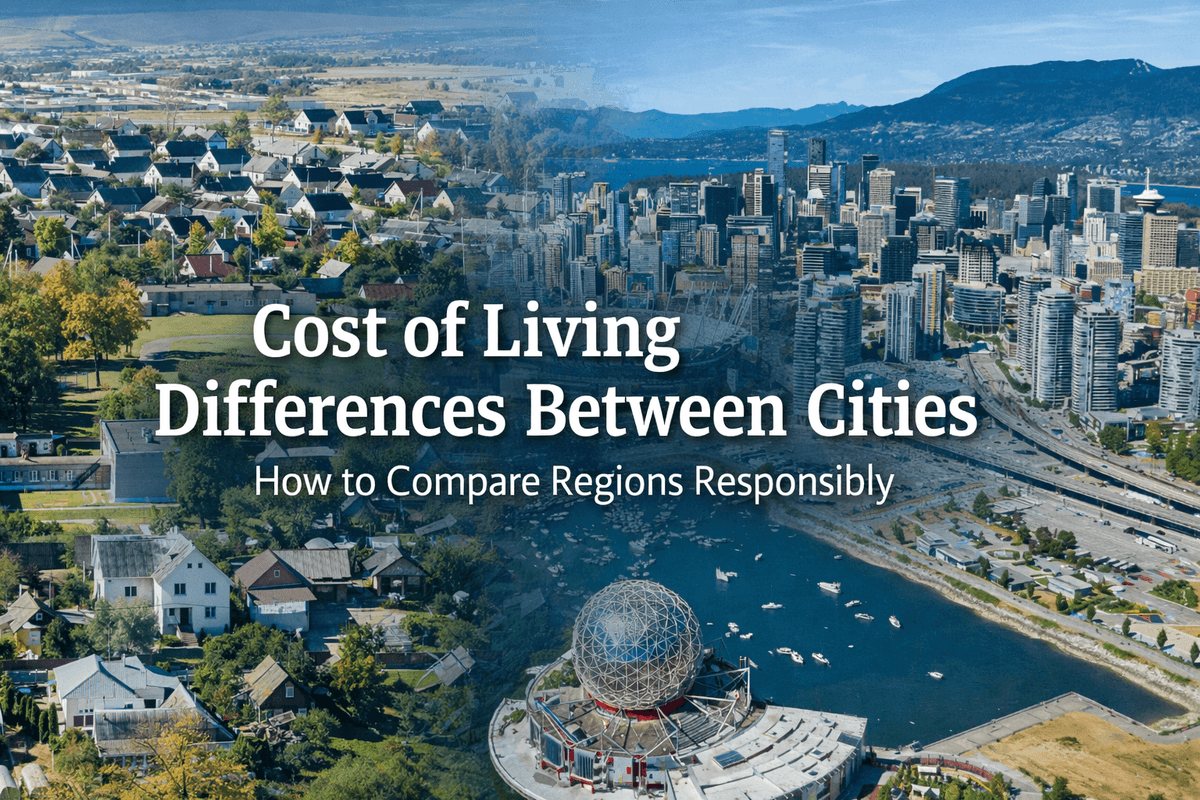
Cost of Living Differences Between Cities: How to Compare Regions
Learn how cost of living differs between cities and regions. Understand housing, transport, and service costs and how to compare cities responsibly across regions.

When people compare cities, they often focus on individual destinations rather than the broader patterns that shape living costs across regions. Yet many of the most meaningful differences in cost of living emerge not from a single city alone, but from the economic, geographic, and structural characteristics of the region it belongs to. Understanding how and why cities within different regions vary in cost can help frame comparisons more accurately and prevent misleading conclusions based on isolated numbers.
Regional cost of living differences are influenced by shared factors such as economic development, labor markets, infrastructure, housing supply, and access to goods and services. Cities within the same region often exhibit similar pricing dynamics, while cities across regions can differ substantially even when they appear comparable in size or population. For this reason, comparing cities responsibly requires looking beyond headline figures and considering the regional context that shapes everyday expenses.
If you want a clearer foundation, start with our explanation of how cost of living is calculated and why indices are used.
Why Regional Context Matters in Cost of Living Comparisons
Cities do not exist in isolation. They are embedded in regional economies that influence wages, housing markets, transportation systems, and consumer prices. For example, cities within highly urbanized regions often experience stronger demand for housing, which can push rents higher across multiple metropolitan areas. In contrast, cities in regions with more abundant land or lower population density may see slower housing price growth, even if local incomes are similar. Even within the same region, spending can vary widely - here's why two people can experience different costs in the same city.
Regional labor markets also affect cost structures. Areas with concentrations of high-paying industries tend to attract more residents, increasing demand for housing and services. This demand can raise prices across multiple cities in the same region, not just in the primary economic hub. At the same time, regions with lower average wages may exhibit lower prices for certain services, even if the cost of goods is similar due to national or global supply chains.
Understanding these regional patterns helps explain why two cities with similar populations can have very different cost profiles depending on where they are located. It also highlights why comparing cities from different regions requires careful interpretation rather than simple ranking. Regional patterns are useful, but for practical planning you can estimate costs before relocating using city-to-city comparisons.
Housing as a Regional Driver of Living Costs
Housing is often the most regionally sensitive component of cost of living. Land availability, zoning regulations, construction costs, and population growth all vary by region and shape local housing markets. Coastal regions, for example, often face geographic constraints that limit new development, contributing to higher rents and property prices across multiple cities. Inland regions may have fewer constraints, allowing housing supply to respond more quickly to demand.
These structural differences mean that housing costs tend to move together within regions. A rise in demand in one major city can spill over into nearby cities as residents seek more affordable alternatives, gradually increasing prices throughout the area. As a result, comparing housing costs between regions can reveal broader affordability trends that are not immediately visible when looking at cities individually.
Transportation and Infrastructure Differences Across Regions
Transportation costs are also shaped by regional design and investment. Regions with extensive public transit networks often allow residents to reduce reliance on private vehicles, lowering transportation expenses for many households. In regions where cities are more spread out and transit options are limited, car ownership becomes more common, adding fuel, insurance, maintenance, and parking costs to monthly budgets.
Infrastructure quality and planning decisions influence not only direct transportation costs but also time-related costs such as commuting duration. While these time costs are not always reflected in financial comparisons, they affect how expensive a city feels in practice. Regional infrastructure patterns therefore play an important role in shaping both monetary and non-monetary aspects of cost of living.
Food, Goods, and Services: Global Prices, Local Variations
Food and consumer goods often show less variation across regions than housing or transportation, particularly in countries with integrated national markets. Large retail chains, standardized supply chains, and international trade can moderate regional price differences for groceries and everyday items. However, regional factors still matter. Import dependence, local agriculture, and labor costs influence food prices, while cultural norms affect spending patterns on dining and prepared foods.
Service-based expenses such as dining out, personal care, and entertainment tend to reflect regional labor costs and rent levels. In regions where wages and commercial rents are higher, service prices often rise accordingly. This means that even if grocery prices appear similar across regions, the cost of services can differ in ways that materially affect monthly spending.
Comparing Cities Across Regions: Interpreting the Numbers
When comparing cities across regions, it is helpful to focus on relative differences rather than absolute totals. A city in one region may have a higher overall cost of living than a city in another, but the reasons behind that difference matter. Is housing the primary driver? Are transportation costs significantly higher? Do service prices account for most of the gap?
By examining category-level differences, regional comparisons become more informative. They reveal which expenses are structurally higher or lower and which may be more sensitive to individual choices. This approach also helps avoid overgeneralization. A region that appears expensive overall may still contain cities or neighborhoods that align well with certain lifestyles or budgets.
The Role of Cost of Living Indices in Regional Comparisons
Cost of living indices are often used to summarize regional differences, but they should be interpreted carefully. Indices rely on assumptions about typical spending patterns, which may not reflect every household. When applied consistently, they are useful for identifying broad regional trends, but they are less effective as standalone decision tools.
Regional comparisons benefit most from using indices as directional indicators rather than definitive rankings. An index can suggest that living costs are generally higher in one region than another, but it cannot capture personal trade-offs or local variability. Combining index data with category breakdowns and contextual understanding leads to more responsible interpretation.
Using Regional Comparisons for Planning, Not Prediction
Regional cost of living comparisons are most valuable when used as part of early-stage planning. They help identify where significant differences exist and where further research is needed. They are not designed to predict individual expenses with certainty, nor can they account for all personal circumstances.
By viewing regional comparisons as a framework rather than a forecast, users can approach relocation or exploration with clearer expectations. Understanding how regions differ provides context for city-level data and supports more informed questions about housing, transportation, and daily expenses.
How CityLivingCosts Supports Regional City Comparisons
CityLivingCosts.com presents estimated cost of living data and city comparisons using a consistent methodology across locations. By allowing users to compare cities directly, including those from different regions, the platform highlights relative differences and category-level drivers of cost. The figures shown are aggregated estimates intended for general informational purposes only and may not reflect individual circumstances.
For users exploring regional differences, comparison pages provide a structured way to see how cities contrast across common spending categories. These comparisons are most effective when used alongside additional local research, especially for housing and transportation, which tend to vary most within and between regions.