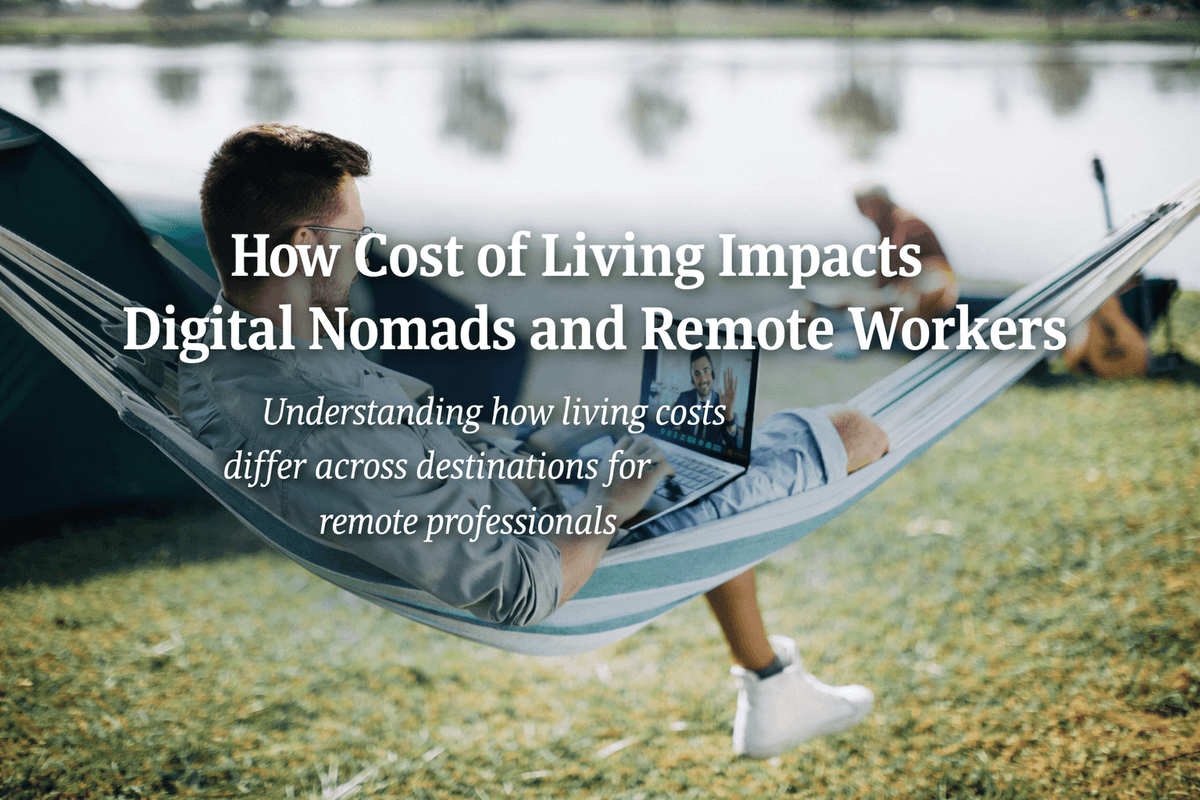
How Cost of Living Impacts Digital Nomads and Remote Workers
Learn how cost of living differences affect digital nomads and remote workers, including housing, daily expenses, lifestyle choices, and purchasing power across cities.

Introduction
Remote work has transformed how people think about where they live. For digital nomads and location-independent professionals, geography is no longer tied to an office commute or employer headquarters. Instead, decisions about where to live are often shaped by a combination of lifestyle preferences, infrastructure quality, time zones, and - critically - cost of living. Understanding how living expenses vary between cities helps remote workers evaluate not only affordability, but also long-term sustainability.
Cost of living comparisons offer a structured way to assess these differences. Rather than focusing solely on rent or short-term travel costs, they provide a broader picture of day-to-day expenses such as food, transportation, utilities, healthcare, and leisure. For digital nomads who frequently move between cities or countries, these recurring costs often determine whether a location feels comfortable or financially restrictive over time.
If you're new to comparisons, start by reading how to understand cost of living basics and what's included in typical estimates.
Why Cost of Living Matters for Remote Workers
Unlike traditional employees who may relocate once or twice in a career, remote workers often reassess their location regularly. Small differences in everyday expenses can compound quickly, especially when staying in a city for several months. A place that appears affordable at first glance may feel significantly more expensive once transportation habits, food preferences, and local pricing structures are taken into account.
Cost of living data helps remote workers understand the full financial context of a city. It highlights not only headline costs like rent, but also how routine activities - grocery shopping, eating out, commuting, or accessing healthcare - compare to other locations. This broader perspective supports more informed decisions when choosing where to live temporarily or long-term.
Housing Costs and Flexibility
Housing is typically the largest expense for remote workers, but it can vary widely depending on rental type, location within a city, and length of stay. Short-term rentals, furnished apartments, and serviced accommodations often carry higher monthly costs than long-term leases. In some cities, these differences can significantly affect overall affordability. For longer stays, it helps to estimate monthly living costs before choosing a base using category-level comparisons.
Cost of living comparisons help contextualize housing expenses by showing how average rents relate to other cities. This allows remote workers to evaluate whether higher housing costs are offset by savings in other categories, such as transportation or food. It also highlights cities where flexible housing options may be more cost-effective relative to local income levels.
Daily Expenses Beyond Rent
While housing is important, daily living costs often shape the overall experience of living in a city. Food prices, public transportation fares, utilities, and internet costs can differ substantially between regions. For digital nomads who rely on stable connectivity and frequent local mobility, these expenses are especially relevant.
Comparing cost of living data across cities reveals how everyday spending patterns change from place to place. In some locations, eating out may be relatively affordable while groceries are more expensive. In others, transportation costs may be minimal due to walkable urban design or extensive public transit systems. Understanding these patterns helps remote workers anticipate how their routines translate into real monthly expenses.
Lifestyle Choices and Spending Patterns
Remote workers often bring diverse lifestyles with them, ranging from minimalist living to highly social, experience-focused routines. Cost of living comparisons provide a neutral framework for evaluating how different lifestyles align with local pricing. Entertainment, fitness, cultural activities, and leisure spending can vary widely between cities, even within the same country.
Rather than prescribing how individuals should live, cost of living data illustrates the financial implications of common lifestyle choices. This allows digital nomads to assess whether a city supports their preferred balance between work, leisure, and savings without relying on assumptions or anecdotal impressions.
The same city can feel affordable or expensive depending on routines - see how lifestyle changes the numbers in practical terms.
Income Independence and Purchasing Power
For remote workers earning income from international clients or employers, purchasing power is often more relevant than local wages. Cost of living comparisons help contextualize how far a given income stretches in different cities by highlighting relative expense levels across regions.
This perspective is particularly useful when comparing cities with similar infrastructure but different pricing structures. Understanding purchasing power differences helps remote workers evaluate affordability without framing decisions around earnings potential or financial advice. Instead, it focuses on how costs relate to typical spending categories.
Evaluating Cities Over Time
Cost of living is not static. Prices fluctuate due to inflation, currency movements, housing demand, and local economic conditions. For digital nomads who plan extended stays or return to the same city periodically, tracking changes over time provides valuable insight into affordability trends.
Using regularly updated cost of living data allows remote workers to reassess cities as conditions evolve. This ongoing evaluation supports more adaptable planning and reduces reliance on outdated assumptions or short-term impressions.
Using Cost of Living Data Responsibly
While cost of living comparisons offer valuable guidance, they are best used as a general reference rather than a precise budget forecast. Individual spending habits, accommodation choices, and lifestyle preferences can lead to significantly different outcomes, even within the same city.
Responsible use of cost of living data involves combining comparative information with personal research and local context. For digital nomads and remote workers, this approach supports balanced decision-making without treating cost estimates as guarantees or financial advice.
Conclusion
For digital nomads and remote workers, choosing where to live is a complex decision influenced by more than scenery or internet speed. Cost of living comparisons provide a structured way to understand how everyday expenses vary between cities and how those differences affect long-term comfort and sustainability.
By viewing cost of living data as an informative reference rather than a prescriptive rule, remote workers can better align their location choices with personal preferences, work requirements, and financial expectations. This perspective encourages thoughtful exploration while maintaining flexibility in an increasingly mobile world.